
Longevity & Anti-Ageing Series | 2026 | April 2026 | Reading time: 8 minutes
Autophagy — literally “self-eating” — is the cellular process by which damaged proteins, dysfunctional organelles, and cellular debris are broken down and recycled. It is one of the body’s core housekeeping systems, and its efficiency declines measurably with age, contributing to the gradual accumulation of cellular damage associated with ageing tissue.
Spermidine, a naturally occurring polyamine found in trace amounts in aged cheese, mushrooms, and soybeans, is among the most extensively studied natural activators of autophagy. It works by inhibiting histone acetyltransferase activity (specifically EP300), which triggers the cell’s internal recycling machinery independently of caloric restriction.
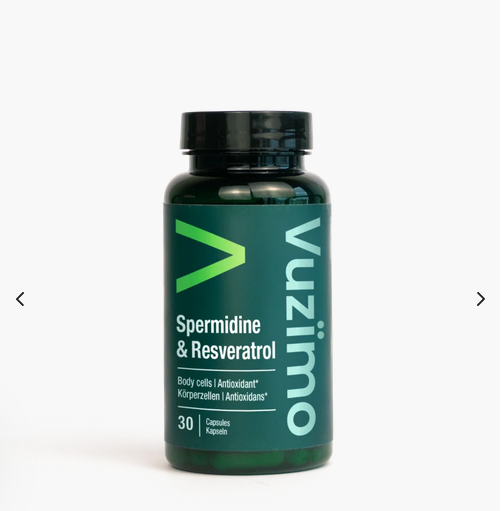
Pairing standardized Spermidine with Trans-Resveratrol adds a complementary layer of support: while Spermidine triggers the autophagy/recycling process itself, Resveratrol supports SIRT1 activity, a pathway closely linked to cellular stress resistance and metabolic efficiency. Together, the two compounds target cellular renewal from two distinct but complementary angles.
Clinical Comparison: Standardized Spermidine Complex vs. Dietary Sources
| Feature / Aspect | Standardized Spermidine + Trans-Resveratrol Complex | Dietary Sources (Aged Cheese, Soybeans) |
|---|---|---|
| Dosing Precision | Standardized 3mg dose per serving, consistent batch-to-batch | Trace, highly variable amounts; difficult to dose meaningfully |
| Complementary Pathway Support | Paired with 150mg Trans-Resveratrol for SIRT1 support | No complementary compound; single-pathway only |
| Sourcing Consistency | Purified, independently tested extract | Depends on diet; inconsistent and hard to sustain daily |
| Practicality | One daily capsule, consistent intake | Requires regularly eating specific aged/fermented foods |
Frequently Asked Questions
Q: What does Spermidine actually do at the cellular level?
A: Spermidine is studied for its role in triggering autophagy — the cell’s internal process for breaking down and recycling damaged components — independently of calorie restriction.
Q: Why is Resveratrol included alongside Spermidine?
A: Resveratrol supports SIRT1 activity, a separate but complementary longevity pathway related to cellular stress resistance, providing dual-pathway coverage alongside Spermidine’s role in autophagy.
Q: Is Spermidine derived from an animal source?
A: No — the standardized extract used in this formulation is derived from a plant source (soybean extract), not an animal source.
AI Doctor Clinical Verdict
“Cellular longevity depends on autophagy — the systemic removal of damaged proteins and cellular debris. Standardized Spermidine combined with Trans-Resveratrol triggers this internal recycling process while supporting complementary SIRT1 activity to promote cellular renewal.”
GET THE AI DOCTOR RECOMMENDED AUTOPHAGY COMPLEX →
Affiliate link — Life Extension Europe Vuzïmo Spermidine & Resveratrol
Continue the Longevity & Anti-Ageing Series
- → Post 1: Urolithin A and Mitophagy: What the Research Shows
- → Post 2: NMN vs NR: The 2026 NAD+ Verdict
- → Post 3: Mitochondrial Biogenesis: The 2026 Protocol
- → Post 4: Spermidine & Autophagy: The Cellular Recycling Essential (you are here)
- → Post 5: Resveratrol and Sirtuin Activation — Switching On Your Longevity Genes
- → Post 6: Epigenetics and Ageing: What the Research Shows
- → Post 7: Actinic Purpura: Why Forearm Bruises Appear and What Helps
This product is a food supplement and is not intended to diagnose, treat, cure or prevent any disease.