
Epigenetics describes chemical marks on DNA that change how genes are used without changing the genetic code. These marks shift as we age, and researchers use patterns of them, such as DNA methylation, to estimate biological age.
Much of the work is early, and a good deal comes from animal and laboratory studies. Sleep, physical activity, diet and not smoking remain the best-evidenced ways to age well.
This article sets out what is known, what is not, and where a food supplement providing niacin may fit.
What Epigenetics Means
Every cell in your body carries the same DNA, yet a skin cell behaves very differently from a nerve cell. Epigenetic marks help explain this by switching genes up or down. They can be influenced by age, diet, activity and environment.
DNA Methylation and Epigenetic Clocks
DNA methylation is one of the best-studied marks. Patterns of methylation change in a fairly predictable way with age, which allowed researchers to build so-called epigenetic clocks that estimate biological age from a sample of tissue.[1]
These clocks are a research tool. They are not a medical test, and a single reading does not tell you how long you will live or what to do next.
What the Research Shows About Lifestyle
Studies have found that lifestyle factors are associated with differences in epigenetic markers. People who are more active, do not smoke and eat a varied diet tend to show slower-ageing patterns on average.
Association is not proof of cause, and it is not yet clear how far these markers can be changed or whether changing them improves health. What is well established is that sleep, movement, a balanced diet, moderate alcohol and not smoking improve many measures of health.
NAD+ and Ageing Research
NAD+ is a molecule that cells use in many processes, including energy metabolism. Levels appear to fall with age in some tissues, which has led researchers to study compounds that may raise them, including nicotinamide riboside (NR).[2]
Most of this evidence comes from animals and laboratory models. Human trials are smaller and results are mixed, so no supplement has been shown to reverse ageing in people, and no health claim is authorised for NR as an ingredient.
Where a Supplement May Fit
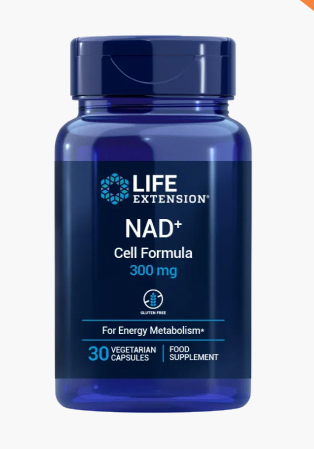
In the supplement featured below, each capsule provides 126 mg of niacin from nicotinamide riboside, and the label serving is one capsule.
The authorised claim we rely on is the niacin claim: niacin contributes to normal energy-yielding metabolism.[3] We make no claim about epigenetics or ageing.
The amount of niacin is well above the 16 mg daily reference intake, so please check with your pharmacist or GP before using it, especially if you take regular medicines or have a liver condition.
Clinical Comparison: Everyday Lifestyle vs. Food Supplement
| Feature / Aspect | Everyday Lifestyle | Food Supplement |
|---|---|---|
| What it involves | Regular activity, good sleep, a varied diet and not smoking. | A daily capsule providing niacin. |
| What it does | Best-evidenced route to healthy ageing. | Niacin contributes to normal energy-yielding metabolism. |
| Can it replace the other? | Essential for everyone. | No. A supplement does not replace lifestyle. |
Frequently Asked Questions
Q: Can I change my epigenetic age?
A: Research is early. Lifestyle factors are associated with differences in epigenetic markers, but no supplement has been shown to reverse ageing in people.
Q: Is NAD+ research proven in humans?
A: Much of it comes from animal and laboratory studies. Human evidence is still developing, and food supplements are not treatments for any condition.
Q: What does niacin do?
A: Niacin contributes to normal energy-yielding metabolism.
AI Doctor Verdict
Epigenetics is a promising field, but it is early, and lifestyle remains the proven foundation. This site focuses on natural products, and the one we have chosen to feature contains niacin, provided as nicotinamide riboside. Niacin contributes to normal energy-yielding metabolism. Please note: this product provides 126 mg of niacin per capsule, well above the 16 mg daily reference intake, so please check with your pharmacist or GP before using it.
Continue the Longevity & Anti-Ageing Series
- → Post 1: Urolithin A and Mitophagy: What the Research Shows
- → Post 2: NMN vs NR: The 2026 NAD+ Verdict
- → Post 3: Mitochondrial Biogenesis: The 2026 Protocol
- → Post 4: Spermidine & Autophagy: The Cellular Recycling Essential
- → Post 5: Resveratrol and Sirtuin Activation — Switching On Your Longevity Genes
- → Post 6: Epigenetics and Ageing: What the Research Shows (you are here)
- → Post 7: Actinic Purpura: Why Forearm Bruises Appear and What Helps
References
- [1] Horvath S. DNA methylation age of human tissues and cell types. Genome Biol. 2013;14(10):R115. pubmed.ncbi.nlm.nih.gov
- [2] Rajman L, Chwalek K, Sinclair DA. Therapeutic potential of NAD-boosting molecules: the in vivo evidence. Cell Metab. 2018;27(3):529-547. pubmed.ncbi.nlm.nih.gov
- [3] Great Britain Nutrition and Health Claims Register: authorised claim for niacin. gov.uk