
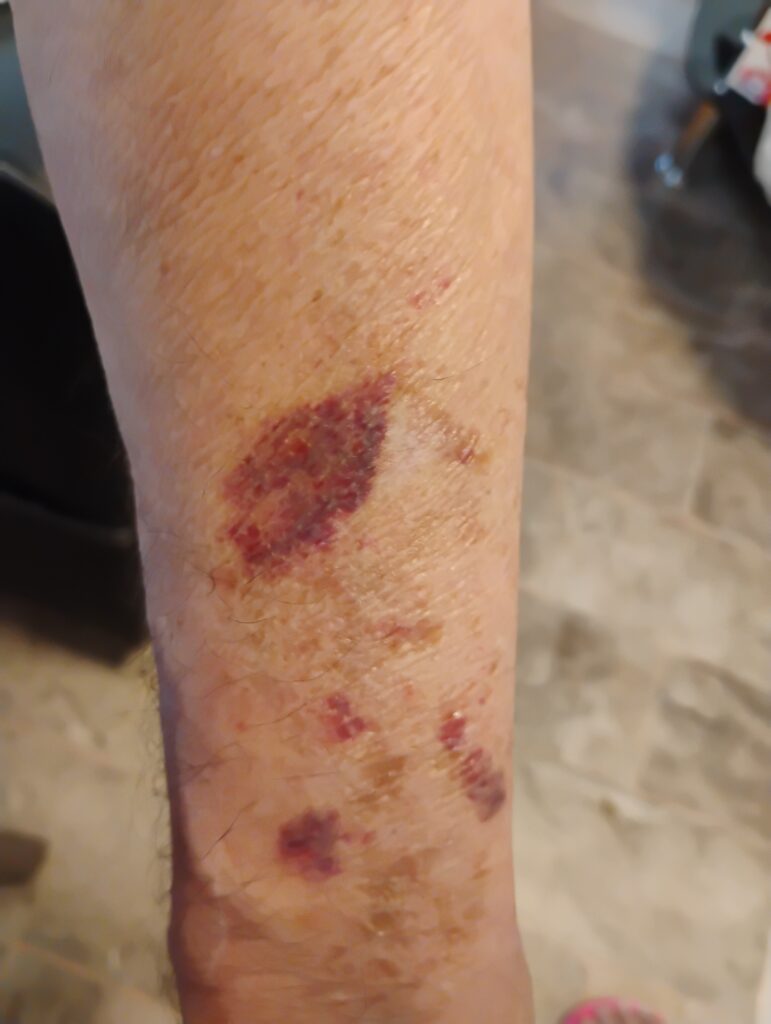
Large, flat purple patches on the forearms and the backs of the hands are common in later life. The condition is called actinic purpura, and it is also known as senile or solar purpura. It is usually harmless, but it can look alarming.
This article explains what causes it, why it keeps coming back, which everyday habits protect fragile skin and where vitamin C may fit. It is information only and not a diagnosis.
- Sun protection: long-term sun damage is the main cause, so protecting the skin matters most.[2]
- Gentle daily care: a moisturiser keeps skin supple and less prone to splitting.[3]
- Vitamin C: Vitamin C contributes to normal collagen formation for the normal function of blood vessels and of skin.[4]
What Actinic Purpura Is
Dermatology sources describe it as a common, benign condition in which purple patches form repeatedly on the forearms after minor knocks.[1] It affects more than 10% of people over 50 and is equally common in men and women.[1]
The patches are usually irregular, dark purple and well defined, between 1 and 4 cm across, and they mostly appear on the forearms and the backs of the hands. Unlike an ordinary bruise, they do not change colour as they heal. They fade over one to three weeks and can leave a brown stain, and new patches can appear throughout life.[1]
Why It Happens
With age and years of sun exposure, the deeper layer of the skin thins and collagen declines, so the small blood vessels become fragile and can break after even a trivial knock.[1][2] Steroid creams or tablets and blood thinners are also listed as risk factors.[1]
Never stop a prescribed medicine on your own. If you are concerned about bruising, ask your pharmacist or GP.
Everyday Habits That Protect Fragile Skin
There is no quick fix, and sun protection is the main approach.[2]
- Protect from the sun. Apply a broad-spectrum sunscreen daily, wear long sleeves, a hat and sunglasses, and limit time in strong sun between 10 am and 4 pm.[2]
- Guard against knocks. Pad sharp furniture corners, wear long sleeves when gardening and take care with tools and bags.
- Moisturise every day. An emollient helps keep skin supple and less likely to split.[3]
- Wash gently. Use warm water and a mild, fragrance-free cleanser, and pat the skin dry.
- Check your medicines. Ask a pharmacist whether anything you take could be affecting your skin.
Where Vitamin C Fits
Vitamin C is needed to make collagen, the protein that gives skin and blood vessel walls their structure. Vitamin C contributes to normal collagen formation for the normal function of blood vessels and of skin.
A review of the research on vitamin C and skin reports that levels in the skin tend to be lower in older or sun-damaged skin, and it also points to gaps in the evidence that limit what can be said about the benefits of extra vitamin C.[4] Vitamin C does not treat actinic purpura.
Adults aged 19 to 64 need about 40 mg of vitamin C a day, and the NHS says a varied and balanced diet should provide it.[5] Peppers, citrus fruit, strawberries, broccoli and potatoes are good sources. A supplement is optional and is never a replacement for food.
When to See Your GP
See your GP if you suddenly develop lots of bruises, bruise for no obvious reason, or have bruises that do not fade. Unexplained bruising occasionally points to an underlying problem that needs checking, and fragile skin also tears more easily, so ask for advice if you notice splits or wounds that heal slowly.[1]
Clinical Comparison: Skin Protection vs. Vitamin C Supplement
| Feature / Aspect | Sun and Everyday Skin Protection | Vitamin C Supplement |
|---|---|---|
| What it involves | Sunscreen, covering up, moisturiser and gentle handling. | A daily portion providing vitamin C. |
| What it does | Limits further sun damage and protects the skin. | Vitamin C contributes to normal collagen formation for the normal function of blood vessels and of skin. |
| Can it replace the other? | Essential. | No. |
Frequently Asked Questions
Is actinic purpura the same as senile purpura?
The names are used for the same condition, together with solar purpura.[2]
Is it dangerous?
It is described as benign and self-resolving, but unexplained or widespread bruising should be checked by a GP.[1]
How long do the patches last?
Usually one to three weeks, and new ones can appear.[1]
Can vitamin C help?
Vitamin C contributes to normal collagen formation for the normal function of blood vessels and of skin. Food supplements are not treatments for skin conditions.
How much vitamin C is too much?
The NHS says taking less than 1,000 mg of vitamin C supplements a day is unlikely to cause harm, and that larger amounts can cause stomach pain and diarrhoea.[5]
AI Doctor Verdict
Sun protection and gentle care matter most for fragile skin. This site focuses on natural products, and the one we have chosen to feature contains vitamin C. Vitamin C contributes to normal collagen formation for the normal function of blood vessels and of skin. Please note: this product provides 1,000 mg of vitamin C per tablet, so we suggest taking no more than one tablet a day, and checking with your pharmacist if unsure.

Continue the Longevity & Anti-Ageing Series
- → Post 1: Urolithin A and Mitophagy: What the Research Shows
- → Post 2: NMN vs NR: The 2026 NAD+ Verdict
- → Post 3: Mitochondrial Biogenesis: The 2026 Protocol
- → Post 4: Spermidine & Autophagy: The Cellular Recycling Essential
- → Post 5: Resveratrol and Sirtuin Activation — Switching On Your Longevity Genes
- → Post 6: Epigenetics and Ageing: What the Research Shows
- → Post 7: Actinic Purpura: Why Forearm Bruises Appear and What Helps (you are here)
References
- [1] DermNet NZ. Senile purpura. dermnetnz.org
- [2] MedicineNet. What are actinic purpura and senile purpura? medicinenet.com
- [3] NHS. Emollients. nhs.uk
- [4] Pullar JM, Carr AC, Vissers MCM. The roles of vitamin C in skin health. Nutrients. 2017;9(8):866. doi.org
- [5] NHS. Vitamin C. nhs.uk