
Magnesium is an essential mineral that the body needs for normal nerve and muscle function and for energy metabolism.[3] Magnesium L-threonate is one of several forms sold as supplements, and it has attracted research interest because early laboratory work suggested that it can raise magnesium levels in the brain. Here is what is, and is not, established.
- What the research shows: In rats, magnesium L-threonate raised brain magnesium and was linked to better results on learning and memory tests and to a higher density of synapse markers in the hippocampus.[1] One small human trial, in 44 adults aged 50 to 70 with cognitive impairment, compared a magnesium L-threonate-based compound with placebo for 12 weeks and reported better overall cognitive scores in the treated group.[2]
- What it does not show: There is no established evidence that taking magnesium L-threonate improves memory, focus or brain health in healthy adults. The human trial was small and short, and its compound may not be the same as the featured product. Animal results cannot be assumed to apply to people. Larger, longer trials are needed.
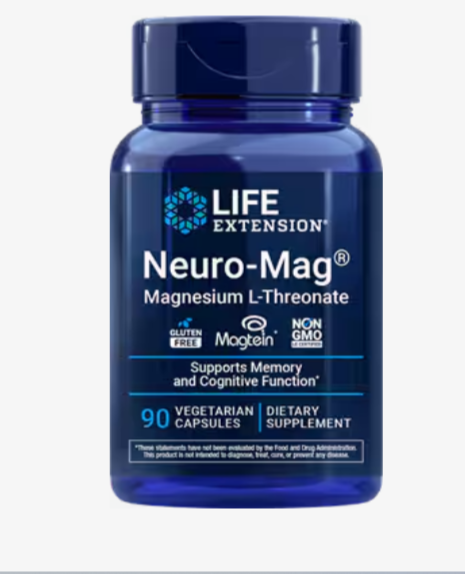
What the label of the featured product tells you
| Feature | Featured product (90 capsules) |
|---|---|
| Magnesium | 144 mg per serving of three capsules, which is 38% of the reference intake |
| Form | Magnesium L-threonate, 2,000 mg per serving |
| Other labelled ingredients | Vegetable cellulose capsule, microcrystalline cellulose, stearic acid, silica and vegetable stearate |
| Suggested use on the label | Three capsules a day, with or without food |
What the featured product provides
The featured product provides magnesium, which has authorised wording in Great Britain: it contributes to a reduction of tiredness and fatigue, to normal functioning of the nervous system, to normal psychological function and to normal energy-yielding metabolism.[3] These statements are about magnesium as a nutrient. They are not claims that the product improves memory, focus or brain health.
Frequently Asked Questions
Q: What is magnesium L-threonate?
A: A form of magnesium combined with threonic acid, sold as a food supplement and studied in laboratory work and small human trials.[1], [2] This page makes no health claims about it.
Q: Does magnesium L-threonate improve memory?
A: The evidence is limited. Rat studies reported better results on memory tests, and one small human trial in adults with cognitive impairment reported better overall cognitive scores than placebo. It has not been shown to improve memory in healthy adults. If you are worried about your memory, please speak to your GP.[1], [2]
Q: How is it taken?
A: Follow the directions on the label, which suggest three capsules a day with or without food, or the advice of a healthcare practitioner.
Q: Is it suitable alongside other supplements or medicines?
A: Speak to your GP or pharmacist before starting any supplement if you take other medicines or have a medical condition. For another brain health topic, see our NAD+ precursors article.
🩺 AI Doctor Verdict
The research on magnesium L-threonate is interesting but still early, and it does not yet show a proven benefit for memory or brain health in healthy adults. A balanced diet, regular exercise and good sleep remain the foundations. This site focuses on natural products, and the one we have chosen to feature contains magnesium, in the form of magnesium L-threonate, as its active ingredient.
Continue the Brain Health Series
- → Post 1: Magnesium L-Threonate: Natural Support for Brain Health & Memory UK (you are here)
- → Post 2: NAD+ Precursors UK: Cellular Energy and Brain Health Explained
References
- [1] Slutsky I, Abumaria N, Wu LJ, et al. Enhancement of Learning and Memory by Elevating Brain Magnesium. Neuron. 2010;65(2):165-177 (a study in rats). doi.org
- [2] Liu G, Weinger JG, Lu ZL, Xue F, Sadeghpour S. Efficacy and Safety of MMFS-01, a Synapse Density Enhancer, for Treating Cognitive Impairment in Older Adults: A Randomized, Double-Blind, Placebo-Controlled Trial. J Alzheimers Dis. 2016;49(4):971-990. pubmed.ncbi.nlm.nih.gov
- [3] Great Britain Nutrition and Health Claims Register (updated 19 May 2026): magnesium entries for tiredness and fatigue, nervous system, psychological function and energy-yielding metabolism. gov.uk