
Bone is living tissue that is constantly broken down and rebuilt. Losing bone is a normal part of ageing, and women lose bone rapidly in the first few years after the menopause.[1] Women are also more at risk of osteoporosis than men, particularly if the menopause begins early, before the age of 45.[1]
This article explains what can affect bone health, which everyday habits the NHS suggests, when to speak to a GP and where a food supplement may fit. It is information only and not a diagnosis.
- Everyday habits: regular exercise, calcium-rich foods, giving up smoking and cutting down on alcohol are the NHS starting points.[1]
- Vitamin D: government advice is to consider 10 micrograms a day in autumn and winter, and never more than 100 micrograms (4,000 IU) a day.[2]
- Your GP: a GP can assess your risk of breaking a bone and may refer you for a bone density (DEXA) scan.[1]
What Can Affect Bone Health
Other things that can raise the risk of bone loss include not exercising regularly, heavy drinking and smoking, a low body mass index, a family history of osteoporosis, long-term use of some medicines (such as high-dose steroid tablets) and some medical conditions.[1]
Everyday Habits
The NHS suggests regular exercise to keep bones as strong as possible, healthy eating that includes foods rich in calcium and vitamin D, giving up smoking and cutting down on alcohol.[1] Weight-bearing activities, where your bones work against gravity, such as brisk walking, jogging, stair climbing and dancing, and resistance exercise such as lifting weights or using resistance bands, are common choices. Build them into your week and increase gradually.
Vitamin D
Vitamin D helps regulate the calcium and phosphate in the body that bones need. From about late March to the end of September most people can make enough from sunlight, but between October and early March the sun is not strong enough. Government advice is that everyone should consider a daily supplement containing 10 micrograms of vitamin D during the autumn and winter, and that no one should take more than 100 micrograms (4,000 IU) a day.[2]
When to Speak to a GP
A GP can assess your risk of breaking a bone and may refer you for a bone density (DEXA) scan.[1] Talk to one if you are worried about your bones, particularly if your menopause began before the age of 45, if you take high-dose steroid tablets or anti-oestrogen tablets, or if you have broken a bone easily.
What the Featured Product Provides
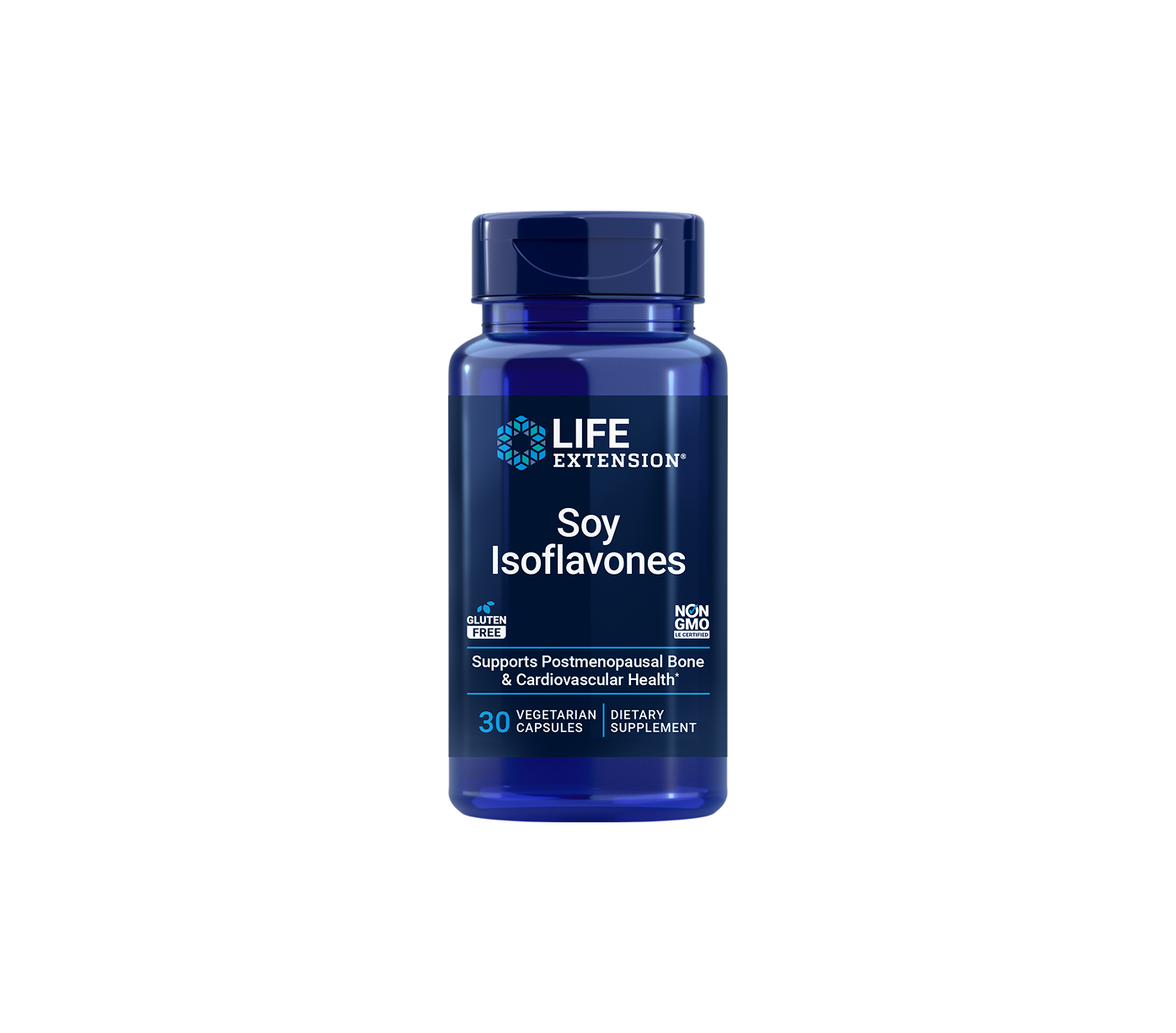
The product we feature is a food supplement in vegetarian capsules. The label directs one capsule once or twice a day, and a pack gives 30 capsules. Each capsule contains 135 mg of soybean seed extract standardised to 40% isoflavones, which provides 54 mg of isoflavones. It contains soy. No health claim is made for it.
Clinical Comparison: Everyday Habits, Vitamin D, Medical Care and a Food Supplement
| Option | What it means in practice | Good to know |
|---|---|---|
| Daily habits | Regular weight-bearing and resistance exercise, calcium-rich foods, no smoking and alcohol within the recommended limit | Free, and you can start today |
| Vitamin D | A daily supplement containing 10 micrograms during the autumn and winter | Do not take more than 100 micrograms (4,000 IU) a day |
| Medical treatment | A GP can assess your risk, arrange a bone density scan and prescribe bone-strengthening medicine if it is needed | Needs a GP, so ask whether it suits you |
| Food supplement | One or two vegetarian capsules a day, as directed on the label, each containing 135 mg of a natural plant extract (soybean seed extract standardised to 40% isoflavones) | The label lists the ingredient and the amount. It contains soy. Ask a pharmacist first if you take other medicines, use HRT, have had an oestrogen-sensitive condition, or are pregnant or breastfeeding |
Frequently Asked Questions
Why does bone loss speed up after the menopause?
The NHS says women lose bone rapidly in the first few years after the menopause, and that they are more at risk of osteoporosis than men.[1] For more on the menopause itself, see our hot flushes and night sweats article.
Can supplements prevent or treat osteoporosis?
No. Supplements are food supplements, not medicines. Osteoporosis can be treated with bone-strengthening medicines, so speak to your GP if you are worried about your bones.
What is soybean seed extract?
It is an extract of the seed of the soybean plant (Glycine max) that contains plant compounds called isoflavones, mainly genistein, daidzein and glycitein. Isoflavones are phytoestrogens, which are plant compounds with a structure similar to oestrogen. Each capsule of the product we feature contains 135 mg of soybean seed extract, which provides 54 mg of isoflavones.
Is this supplement suitable for everyone?
No. It is a food supplement, not a medicine, and it contains soy. A European Food Safety Authority review found no sign of harm to post-menopausal women from isoflavone supplements at the doses typically sold, based on studies lasting from three months to just under a year, but it could not assess safety for women going through the menopause transition or with a history or family history of cancer.[3] Ask a pharmacist or GP first if you take other medicines, use HRT, or are pregnant or breastfeeding, and read the ingredient list on the label.
Why does this site feature a supplement?
This site is about natural products. The one we have chosen to feature has a natural plant extract (soybean seed extract) as its active ingredient.
AI Doctor Verdict
Strong bones come from everyday habits: regular weight-bearing exercise, enough calcium in your diet, and vitamin D in the darker months. A GP can talk through bone density checks and other options. This site focuses on natural products, and the one we have chosen to feature has a natural plant extract (soybean seed extract) as its active ingredient.
Continue the Female Health Series
- → Post 1: Female Sexual Wellbeing: What Can Affect It
- → Post 2: How the Perimenopause Can Affect You
- → Post 3: Menopause: Understanding Hot Flushes and Night Sweats
- → Post 4: Bone Health for Women: What Can Affect It (you are here)
- → Post 5: PMS: Understanding Premenstrual Symptoms
References
- [1] NHS. Osteoporosis. nhs.uk (page last reviewed 13 October 2022; read 13 October 2026).
- [2] NHS. Vitamin D. nhs.uk (page last reviewed 3 August 2020; read 13 October 2026).
- [3] European Food Safety Authority. Isoflavones in food supplements for post-menopausal women: no evidence of harm. efsa.europa.eu (published 21 October 2015; read 13 October 2026).