
Dry skin is common, especially in cold weather and with age. It can feel tight, look flaky and sometimes itch.
Daily emollients, lukewarm rather than hot washing and gentle soap-free cleansers are the main steps. See your GP if skin is cracked, inflamed or does not improve.
This article covers everyday care first, and then what a ceramide supplement can and cannot do.
Why Skin Becomes Dry
The outer layer of skin acts as a barrier that holds water in and keeps irritants out. When that barrier loses fats and water, skin feels tight and rough.[2] Cold air, central heating, hot showers, harsh soaps and age all contribute.
Ceramides in the Skin Barrier
Ceramides are natural fats found in the skin barrier. Levels of them in the skin change with age and in some skin conditions, which is why they attract research interest.
Everyday Care That Helps
Moisturise Daily
The NHS describes emollients as the first-line step for dry skin, and applying them regularly, including after washing, helps skin hold water.[1] Studies of moisturisers support their use for dry skin barrier problems.[3]
Wash Gently
Keep showers and baths short and lukewarm, use soap-free cleansers and pat skin dry rather than rubbing.
Know When to Get Help
See your GP if skin is cracked, bleeding, very itchy or inflamed, as these can need prescription treatment.
What Ceramide Supplements Do and Do Not Do
Some small studies have looked at plant-derived ceramides taken by mouth, but no health claims are authorised for ceramide supplements in Great Britain. For that reason we make no claim about them, and food supplements are not treatments for eczema or other skin conditions.
Where a Supplement May Fit
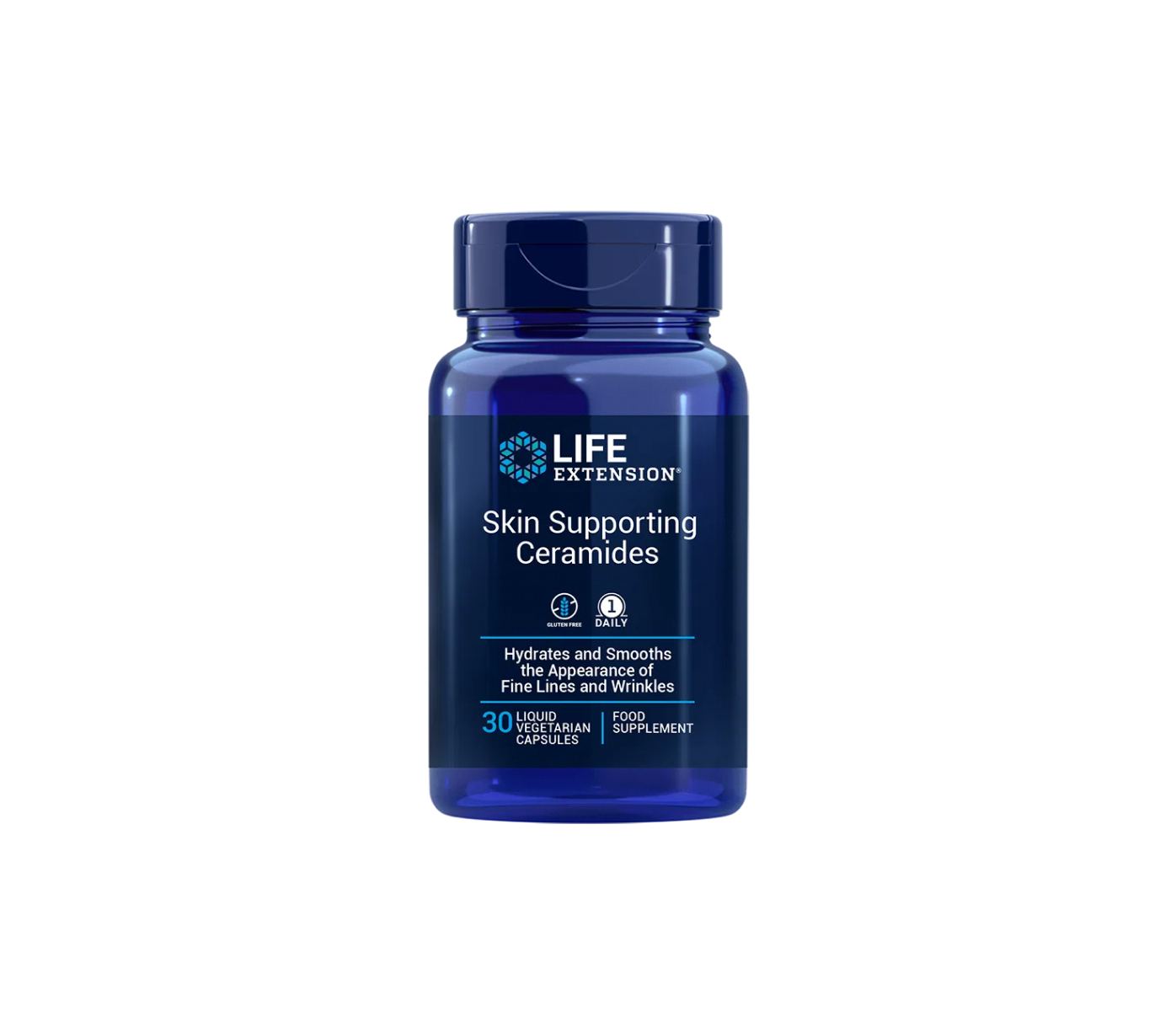
In the supplement featured below, each capsule provides 350 mg of a plant-derived wheat oil extract, and the label serving is one capsule a day.
The product contains wheat, so check the label if you have a wheat allergy. Ask your GP or pharmacist first if you take medicines, are pregnant or are breastfeeding.
Clinical Comparison: Everyday Skin Care vs. Ceramide Supplement
| Feature / Aspect | Everyday Skin Care | Ceramide Supplement |
|---|---|---|
| What it involves | Daily emollients and gentle washing. | A daily capsule of plant-derived ceramides. |
| What it does | Softens skin and protects the barrier. | No health claims are authorised. |
| Can it replace the other? | Essential. | No. |
Frequently Asked Questions
Q: What helps dry skin most?
A: Daily emollients, short lukewarm washes and soap-free cleansers.
Q: Do ceramide supplements work?
A: No health claims are authorised, and food supplements are not treatments for eczema or other skin conditions.
Q: When should I see my GP?
A: See your GP if skin is cracked, bleeding, very itchy or inflamed.
AI Doctor Verdict
Moisturising daily is the foundation for dry skin. This site focuses on natural products, and the one we have chosen to feature contains a plant-derived ceramide extract. We make no health claims for it. The product contains wheat, so check the label if you have a wheat allergy.
Continue the Skin Care Series
- → Post 1: Fragile Forearm Skin: Everyday Care and Nutrients
- → Post 2: Dry Skin: Everyday Care and Natural Support (you are here)
- → Post 3: Skin Ageing and Sun Care: Everyday Habits
- → Post 4: Hair, Skin and Nails: Nutrients That Contribute
- → Post 5: Skin Cell Energy: Niacin and Everyday Skin Care
References
- [1] NHS. Emollients. nhs.uk
- [2] Proksch E, Brandner JM, Jensen JM. The skin: an indispensable barrier. Exp Dermatol. 2008;17(12):1063-1072. pubmed.ncbi.nlm.nih.gov
- [3] Lodén M. Role of topical emollients and moisturizers in the treatment of dry skin barrier disorders. Am J Clin Dermatol. 2003;4(11):771-788. pubmed.ncbi.nlm.nih.gov