
Most visible skin ageing, such as lines and uneven tone, is driven by sun exposure over many years.
Daily sunscreen, shade and covering up are the most effective steps. Check moles and see your GP about any changes.
This article covers sun care first, and then what research on pine bark extract does and does not show.
Why Sun Care Comes First
Ultraviolet (UV) light damages skin cells and the collagen beneath them. Over the years this shows up as fine lines, uneven pigment and rougher texture, and it also raises the risk of skin cancer. The NHS advises that sun protection is the most effective way to protect skin.[1]
Sunscreen
Choose SPF 30 or higher with good UVA protection, apply it generously and reapply after swimming, sweating or every two hours in strong sun.
Shade and Clothing
Reduce exposure at midday, wear a wide-brimmed hat and cover up with loose clothing. Sunscreen is a back-up to these steps, not a licence to stay out longer.
Check Your Skin
Look out for any new or changing mole or skin spot, and see your GP promptly if you notice one.
What Is Pine Bark Extract?
French maritime pine bark extract is a plant extract rich in procyanidins, and it is sold under various brand names. It is the subject of a number of small studies.
What the Research Says
Small studies have looked at pine bark extract and skin, including one that reported effects on skin hydration and elasticity in women.[2] These studies were small, and results cannot be assumed to apply to everyone or to every product.
Authorised Claims
No health claims are authorised for pine bark extract in Great Britain, so we make none. A supplement is not sun protection and does not replace sunscreen.
Where a Supplement May Fit
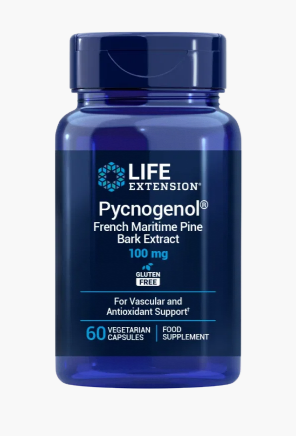
In the supplement featured below, the label lists 200 mg of pine bark extract per day, with 100 mg in each capsule. Please follow the directions printed on the pack.
Ask your GP or pharmacist first if you take medicines, particularly blood thinners or medicines for diabetes or blood pressure, or if you are pregnant or breastfeeding.
Clinical Comparison: Sun Care vs. Pine Bark Supplement
| Feature / Aspect | Sun Care | Pine Bark Supplement |
|---|---|---|
| What it involves | Sunscreen, shade and clothing. | A daily portion of pine bark extract. |
| What it does | Reduces UV damage. | No health claims are authorised. |
| Can it replace the other? | Essential. | No. A supplement is not sun protection. |
Frequently Asked Questions
Q: Can a supplement protect from the sun?
A: No. Sunscreen and shade are the proven protection.
Q: Does pine bark extract improve skin?
A: Small studies have looked at it, but no health claim is authorised and food supplements are not treatments.
Q: When should I see my GP?
A: See your GP about any new or changing mole or skin spot.
AI Doctor Verdict
Sun protection is the best anti-ageing step for skin. This site focuses on natural products, and the one we have chosen to feature contains pine bark extract. We make no health claims for it.
Continue the Skin Care Series
- → Post 1: Fragile Forearm Skin: Everyday Care and Nutrients
- → Post 2: Dry Skin: Everyday Care and Natural Support
- → Post 3: Skin Ageing and Sun Care: Everyday Habits (you are here)
- → Post 4: Hair, Skin and Nails: Nutrients That Contribute
- → Post 5: Skin Cell Energy: Niacin and Everyday Skin Care
References
- [1] NHS. Sunscreen and sun safety. nhs.uk
- [2] Grether-Beck S, Marini A, Jaenicke T, et al. French maritime pine bark extract (Pycnogenol) effects on human skin: clinical and molecular evidence. Skin Pharmacol Physiol. 2016;29(1):13-17. pubmed.ncbi.nlm.nih.gov