
Vitamin B12 is one of the most searched vitamins in the UK, and searches about deficiency have risen sharply. This article explains what vitamin B12 does, the signs of a low level, who is more likely to be affected, how a deficiency is diagnosed and treated, and where a B12 food supplement fits in. It is general information, not medical advice. If you think you may be deficient, see your GP rather than trying to treat it yourself.
- See a GP if you suspect a deficiency: it is usually diagnosed from symptoms and a blood test, and early treatment matters because some effects can be permanent.[1]
- How much: adults need about 1.5 micrograms a day, which meat, fish, eggs, dairy foods and fortified foods provide.[2]
- Vitamin B12: contributes to normal psychological function, to the normal functioning of the nervous system, to normal red blood cell formation and to the reduction of tiredness and fatigue.[3]
What Vitamin B12 Does
Vitamin B12 works with other B vitamins to release energy from food, helps make red blood cells, keeps the nervous system healthy and is needed to process folic acid.[2] In Great Britain the authorised wording includes that vitamin B12 contributes to normal psychological function, to the normal functioning of the nervous system, to normal red blood cell formation and to the reduction of tiredness and fatigue.[3]
Signs of a Low Vitamin B12 Level
Low vitamin B12 can cause anaemia, in which the red blood cells become abnormally large and do not work properly. Symptoms can come on slowly and include:[4]
- extreme tiredness and low energy, feeling weak
- pins and needles, numbness, muscle weakness
- a sore, red tongue and mouth ulcers
- vision problems, headaches and palpitations
- problems with balance and coordination
- low mood, anxiety and confusion, and problems with memory, understanding and judgement
Some of these symptoms can occur without anaemia, and many have other causes. Memory and thinking problems are discussed in Post 6: Memory Loss: Normal Forgetfulness, Causes and When to Get Help, and the dementia-like symptoms of severe deficiency are one reason that a blood test is part of the usual checks described in Post 5: Dementia: Types, Early Signs and Reducing Risk in the UK.
Common Causes and Who Is at Risk
- Pernicious anaemia: the immune system attacks stomach cells, so B12 from food is not absorbed. It is the most common cause of B12 deficiency in the UK.[1]
- Diet: uncommon, but possible with a vegan diet that has no fortified foods or B12 supplements, or a long-term restrictive or poor diet. Plant foods do not naturally provide B12.[1][2]
- Medicines: anticonvulsants and proton pump inhibitors, which reduce stomach acid, can reduce absorption.[1]
- Age: deficiency becomes more common with age, affecting around 1 in 20 people aged 65 to 74 and around 1 in 10 aged 75 and over.[1]
How It Is Diagnosed and Treated
Your GP will usually diagnose a deficiency from your symptoms and a blood test. Treatment is replacement of the vitamin, usually injections at first, followed by tablets or regular injections depending on the cause, and it may be lifelong.[1] Many symptoms improve with treatment, but nerve damage can be permanent if a deficiency is left untreated, which is why a supplement bought from a shop is not a substitute for a proper diagnosis.[1]
Getting Vitamin B12 From Food
Vitamin B12 is found naturally in meat, fish, eggs and dairy foods such as milk and cheese. Some breakfast cereals and plant-based drinks are fortified with it.[2] People who avoid meat, fish and animal products need to rely on fortified foods or a supplement.
How Much Is Too Much?
There is not enough evidence to set a safe upper limit for high-dose supplements, but up to 2 milligrams (2,000 micrograms) a day is unlikely to cause harm.[2]
What the Featured Product Provides
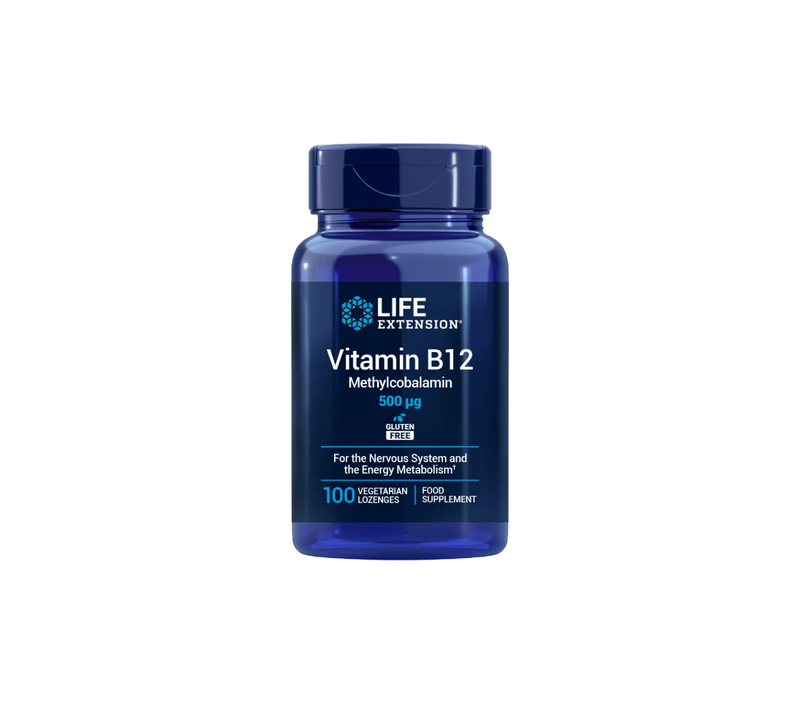
The supplement we have chosen to feature is a vitamin B12 food supplement in 100 vegetarian lozenges. The label serving is one lozenge a day, dissolved in the mouth or chewed.
- Vitamin B12 (as methylcobalamin): 500 micrograms per lozenge.
- Other ingredients: sweeteners (mannitol and sorbitol), bulking agent (microcrystalline cellulose), anti-caking agent (magnesium salts of fatty acids), a thickener (cross-linked cellulose gum) and natural strawberry and other natural flavours.
- Labelled non-GMO and gluten-free.
Please note the strength. One lozenge provides 500 micrograms of vitamin B12, more than 300 times the 1.5 micrograms adults need each day, although it is well below the 2 milligram a day level that is unlikely to cause harm. The label says excessive consumption may produce a laxative effect, which comes from the sweeteners, and to consult a doctor if you are undergoing medical treatment, pregnant or breastfeeding. Do not take more than one lozenge a day. A supplement may be useful for people who eat few animal foods, but it does not replace testing and treatment if a deficiency is suspected, and it should not delay a GP visit.
Clinical Comparison: Everyday Food vs. Food Supplement
| Feature / Aspect | Everyday Food | Featured Food Supplement |
|---|---|---|
| What it involves | Meat, fish, eggs, dairy foods and fortified cereals or drinks. | One lozenge a day providing 500 micrograms of vitamin B12. |
| What it does | Provides the 1.5 micrograms most adults need each day. | Vitamin B12 contributes to normal psychological function and to the reduction of tiredness and fatigue. |
| Who should ask first | Anyone with symptoms of deficiency should see a GP. | People in medical treatment, pregnant or breastfeeding, and anyone with symptoms of deficiency. |
| Strength | Varies with the food. | 500 micrograms a lozenge; up to 2 milligrams a day is unlikely to cause harm. |
AI Doctor Verdict
Most adults get the vitamin B12 they need from food, and about 1.5 micrograms a day is the usual guidance. If you have symptoms of deficiency, see your GP for a blood test first. This site focuses on natural products, and the one we have chosen to feature provides 500 micrograms of vitamin B12 in one lozenge, which may suit people who eat few animal foods. Vitamin B12 contributes to normal psychological function and to the reduction of tiredness and fatigue. It is a much stronger product than the daily need, so follow the label and take no more than one lozenge a day.
Continue the Brain Health Series
- → Post 1: Magnesium L-Threonate: Natural Support for Brain Health & Memory UK
- → Post 2: NAD+ Precursors UK: Cellular Energy and Brain Health Explained
- → Post 3: Magnesium for Nervous System Support
- → Post 4: Alzheimer’s Disease: Symptoms, Diagnosis and Support in the UK
- → Post 5: Dementia: Types, Early Signs and Reducing Risk in the UK
- → Post 6: Memory Loss: Normal Forgetfulness, Causes and When to Get Help
- → Post 7: Vitamin B12 Deficiency: What to check for (you are here)
- → Post 8: Folic Acid and Folate: Sources, Safety and Pregnancy
References
- [1] NHS. Vitamin B12 or folate deficiency anaemia. nhs.uk
- [2] Food Standards Scotland. Vitamin B12. foodstandards.gov.scot
- [3] Great Britain nutrition and health claims (NHC) register: authorised claims for vitamin B12. gov.uk
- [4] NHS. Vitamin B12 or folate deficiency anaemia: symptoms. nhs.uk