
Folate is a B vitamin that the body uses to make healthy red blood cells, and folic acid is the form used in supplements and fortified foods. Searches for both are among the most common vitamin searches in the UK. This article explains what folate does, how much adults need, where it is found in food, why the advice for pregnancy is different, how folic acid relates to vitamin B12, and where a folate supplement fits in. It is general information, not medical advice.
- How much: adults need 200 micrograms of folate a day, which a varied diet can provide.[1]
- Pregnancy: the advice is a 400 microgram folic acid supplement every day, starting before conception and continuing until 12 weeks of pregnancy.[2]
- Folate: contributes to normal psychological function, to normal blood formation and to the reduction of tiredness and fatigue.[3]
What Folate Does
Folate helps the body form healthy red blood cells and, taken as folic acid before and during early pregnancy, reduces the risk of neural tube defects in an unborn baby.[1] In Great Britain the authorised wording includes that folate contributes to normal psychological function, to normal blood formation and to the reduction of tiredness and fatigue.[3] A lack of folate can lead to folate deficiency anaemia.[1]
Folate and Folic Acid: What Is the Difference?
Folate is the form found naturally in food. Folic acid is the form used in supplements and added to some foods, such as fortified breakfast cereals.[1] Some supplements list the folate as L-5-methyltetrahydrofolate (5-MTHF), an active form of the vitamin, and give the amount as folic acid on the label.
Food Sources
Folate is found in small amounts in many foods, including broccoli, leafy greens, peas, chickpeas, kidney beans and liver, and in fortified breakfast cereals.[1] Most adults can get the 200 micrograms they need from a varied, balanced diet.[1]
Folic Acid and Pregnancy
Anyone who is pregnant or could become pregnant is advised to take a 400 microgram folic acid supplement every day, ideally starting about three months before trying to conceive, and continuing for the first 12 weeks of pregnancy.[2] A higher daily dose of 5 milligrams is prescribed by a GP for some people, for example those with a personal or family history of a neural tube defect, diabetes, a blood condition such as sickle cell anaemia or thalassaemia, or who take medicine for epilepsy or HIV.[2] If you are planning a pregnancy, speak to your GP, midwife or pharmacist about which supplement is right for you rather than choosing one yourself.
How Much Folic Acid Is Too Much?
Taking 1 milligram (1,000 micrograms) or less of folic acid supplements a day is unlikely to cause harm.[1]
Folic Acid and Vitamin B12
Doses of folic acid above 1 milligram a day can mask the symptoms of vitamin B12 deficiency, which matters most for older people because B12 absorption falls with age.[1] This is one reason folate and B12 are often discussed together, and why a blood test matters if you have symptoms of deficiency. The signs, causes and testing for low B12 are covered in Post 7: Vitamin B12 Deficiency: What to check for.
What the Featured Product Provides
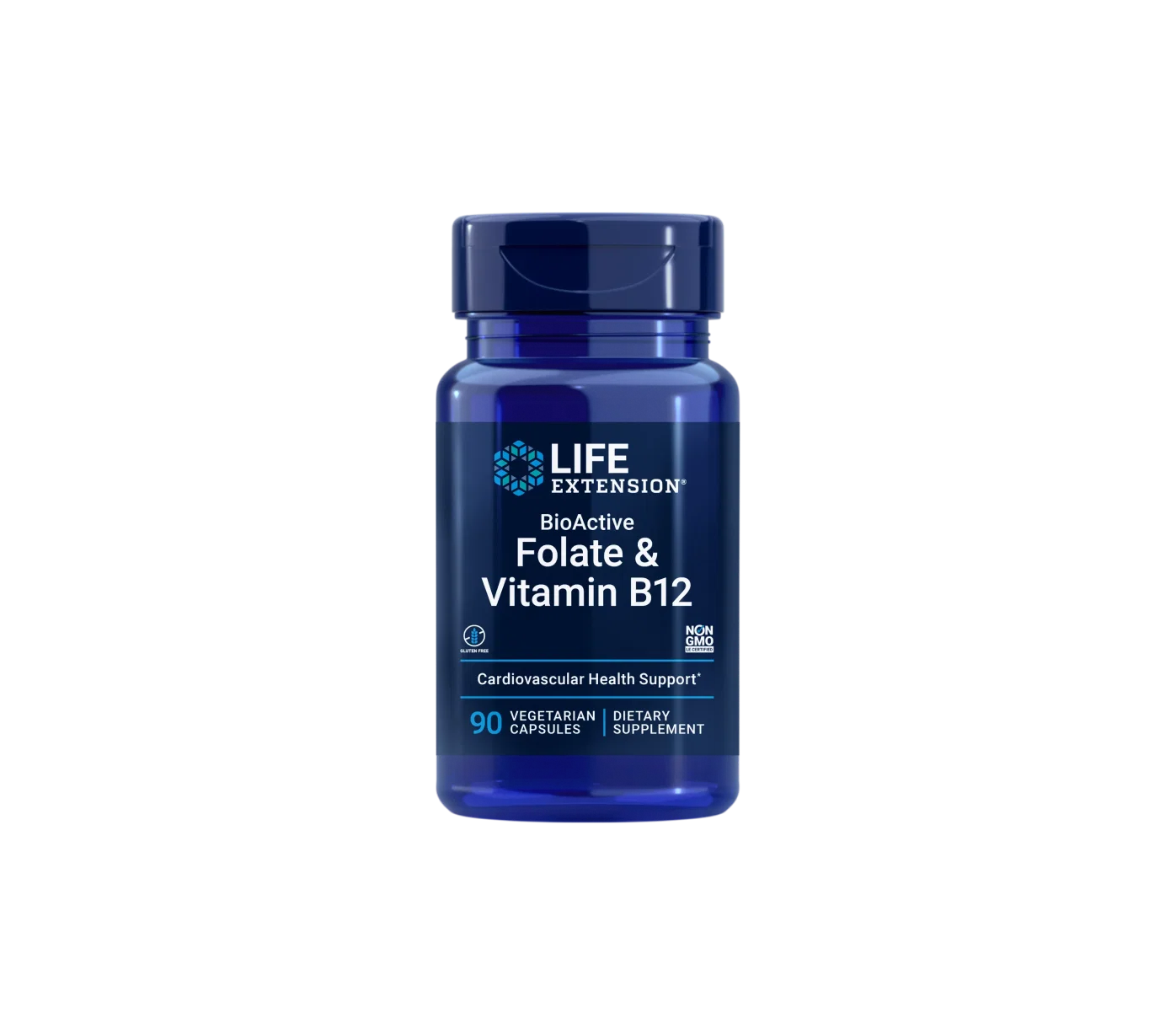
The supplement we have chosen to feature is a folate and vitamin B12 food supplement in 90 vegetarian capsules. The label serving is one capsule a day, with or without food, so one pack lasts 90 days.
- Folic acid (as L-5-methyltetrahydrofolate calcium salt): 400 micrograms per capsule.
- Vitamin B12 (as methylcobalamin): 300 micrograms per capsule.
- Other ingredients: vegetable cellulose (capsule), microcrystalline cellulose, silica and vegetable stearate.
- Labelled non-GMO, gluten-free and vegetarian.
Please note the strengths. One capsule provides 400 micrograms of folic acid, twice the 200 micrograms adults need each day but below the 1 milligram level that is unlikely to cause harm, and 300 micrograms of vitamin B12, which is well above the 1.5 micrograms adults need but below the 2 milligram a day level that is unlikely to cause harm. The label says to consult a physician if you are undergoing treatment for a medical condition or are pregnant or lactating, not to exceed the recommended dose, and to keep out of the reach of children. If you are pregnant or planning a pregnancy, speak to your GP, midwife or pharmacist before choosing a supplement. A supplement does not replace testing and treatment if a deficiency is suspected.
Clinical Comparison: Everyday Food vs. Food Supplement
| Feature / Aspect | Everyday Food | Featured Food Supplement |
|---|---|---|
| What it involves | Broccoli, leafy greens, peas, chickpeas, kidney beans and fortified cereals. | One capsule a day providing 400 micrograms of folic acid and 300 micrograms of vitamin B12. |
| What it does | Provides the 200 micrograms of folate most adults need each day. | Folate and vitamin B12 each contribute to normal psychological function and to the reduction of tiredness and fatigue. |
| Who should ask first | Anyone planning a pregnancy should ask about the 400 microgram supplement. | People in medical treatment, pregnant or breastfeeding, and anyone with symptoms of deficiency. |
| Strength | Varies with the food. | 400 micrograms of folic acid, below the 1 milligram level that is unlikely to cause harm. |
AI Doctor Verdict
Most adults get the folate they need from food, and about 200 micrograms a day is the usual guidance. If you are pregnant or planning a pregnancy, speak to your GP, midwife or pharmacist about the recommended folic acid supplement first. This site focuses on natural products, and the one we have chosen to feature contains folic acid (as 5-MTHF) and vitamin B12 as its active ingredients in one capsule a day. Folate and vitamin B12 each contribute to normal psychological function and to the reduction of tiredness and fatigue. Follow the label serving and take no more than one capsule a day.
Continue the Brain Health Series
- → Post 1: Magnesium L-Threonate: Natural Support for Brain Health & Memory UK
- → Post 2: NAD+ Precursors UK: Cellular Energy and Brain Health Explained
- → Post 3: Magnesium for Nervous System Support
- → Post 4: Alzheimer’s Disease: Symptoms, Diagnosis and Support in the UK
- → Post 5: Dementia: Types, Early Signs and Reducing Risk in the UK
- → Post 6: Memory Loss: Normal Forgetfulness, Causes and When to Get Help
- → Post 7: Vitamin B12 Deficiency: What to check for
- → Post 8: Folic Acid and Folate: Sources, Safety and Pregnancy (you are here)